10 Digital Marketing Strategies Every Small Business Should Use in 2026
Digital marketing strategies for small business in 2026 is no longer optional. Customers search online, discover brands through social media, compare reviews, and often make purchasing decisions before contacting a business.
The good news is that small businesses don’t need a huge marketing budget to build an online presence. With the right strategy and consistent effort, digital channels can help increase visibility, generate leads, and build customer relationships.
Here are 10 digital marketing strategies for small business in 2026.
1. Learn digital marketing strategies for small business in 2026 to build a strong online Presence
Start with the basics: create a professional website and maintain accurate business information across important online platforms.
Your website should clearly explain what you offer, who you serve, how customers can contact you, and what action you want visitors to take.
2. Focus on Local SEO
If you operate locally, make it easy for nearby customers to find you online.
Optimize your Google Business Profile, maintain consistent business information, collect genuine customer reviews, and create content relevant to your local area.
For example, a salon in Bengaluru could target searches related to “salon in Bengaluru” or specific neighbourhoods it serves.
3. Use Social Media Strategically
Social media isn’t just about posting every day. Your content should have a purpose.
Small businesses can use platforms such as Instagram, Facebook, LinkedIn, or YouTube depending on where their target customers spend time.
Try a mix of educational posts, product demonstrations, customer stories, behind-the-scenes content, and short-form videos.
4. Create Valuable Content
Content marketing can help businesses demonstrate expertise and answer customer questions.
You can create:
- Blog posts
- Reels
- Tutorials
- Guides
- FAQs
- Infographics
- Customer stories
Instead of constantly saying “Buy our product,” focus on helping your audience solve problems.
5. Use Short-Form Video
Short-form video remains an important content format for businesses trying to capture attention online.
A simple smartphone can be enough to create useful videos. Demonstrate a product, answer a common question, show how something works, or share a customer experience.
The focus should be on useful and relevant content rather than simply chasing viral trends.
6. Try Paid Advertising
Organic marketing can take time, while paid advertising can help businesses reach specific audiences more quickly.
Platforms such as Google Ads and Meta Ads can be used for objectives such as website traffic, lead generation, product promotion, or conversions.
Start with a controlled budget, test different creatives and audiences, and measure the results before increasing spending.
7. Build an Email or Customer Database
Don’t depend entirely on social media platforms to maintain customer relationships.
Where appropriate and with proper consent, collect customer contact information and use it to send useful updates, offers, newsletters, or product information.
A strong customer database can become a valuable long-term business asset.
8. Encourage Genuine Reviews
Reviews can influence how potential customers perceive a business.
After a successful purchase or service, encourage satisfied customers to leave honest reviews on relevant platforms.
Respond professionally to both positive and negative feedback. Never create fake reviews or manipulate ratings.
9. Use AI and Automation Carefully
AI tools can help small businesses save time with tasks such as brainstorming content ideas, drafting copy, analyzing data, and creating marketing workflows.
However, AI-generated content should be reviewed and customized. Your brand’s expertise, experience, and authentic voice should remain at the centre of your marketing.
10. Track Your Results
One of the biggest advantages of digital marketing is the ability to measure performance.
Track metrics that connect to your business goals, such as:
- Website traffic
- Leads
- Conversion rate
- Engagement
- Cost per lead
- Sales
- Return on advertising spend
Don’t focus only on likes and followers. A smaller audience that generates qualified leads can be more valuable than a large audience with little business impact.
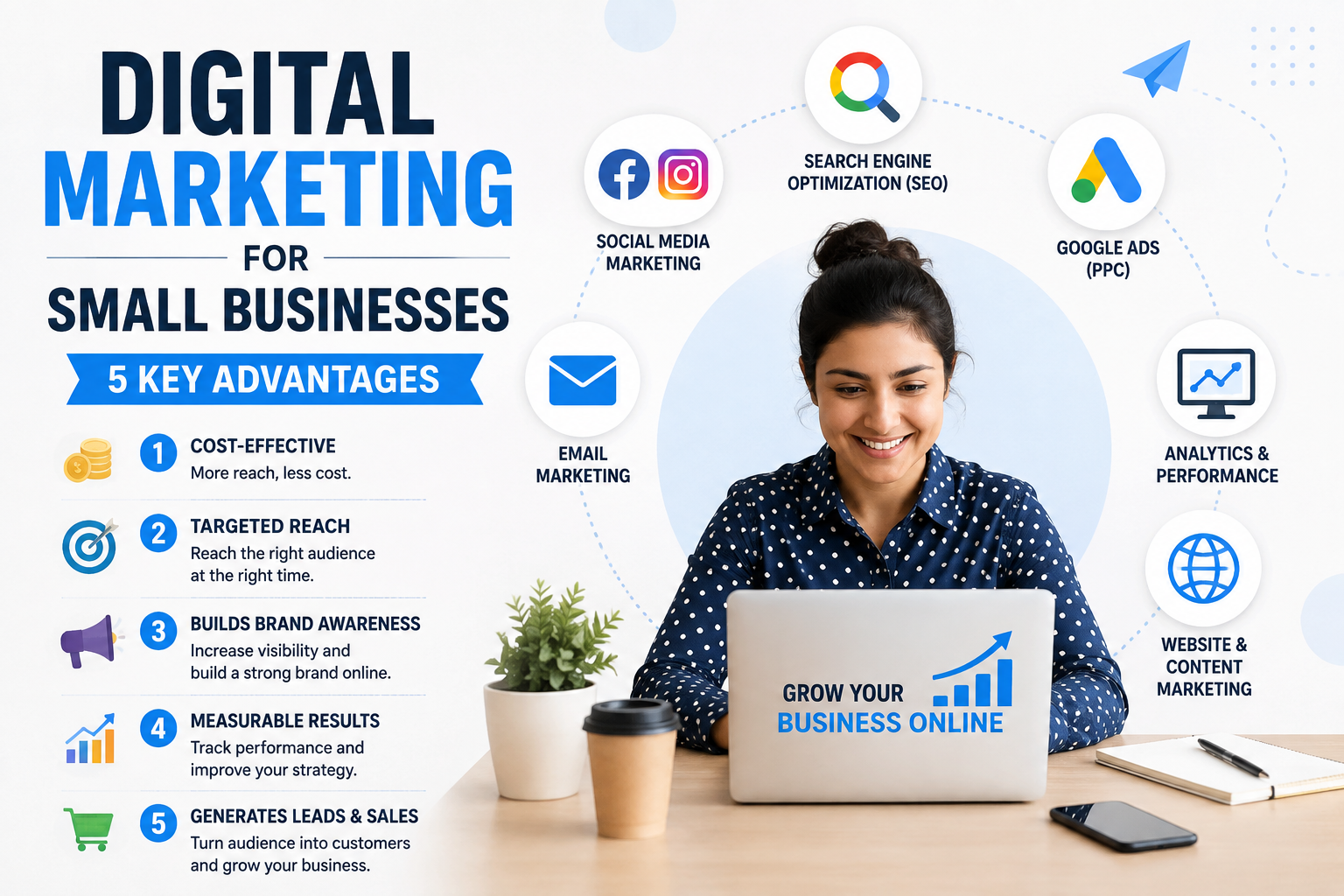
Final Thoughts
Digital marketing doesn’t mean being active on every platform or spending a large amount of money on advertising.
For a small business, the better approach is to understand your target audience, choose the right channels, create useful content, build trust, and consistently measure results.
Start with a few strategies that match your business goals and resources. Once you understand what works, you can gradually expand your digital marketing efforts.
In 2026, the goal isn’t simply to be visible online—it is to be useful, trustworthy, and easy for the right customers to find.